“This article expresses my personal analysis based on publicly available financial data and market reports.”
In late 2025, Indian tech circles buzzed with one question: Why is Bhavish Aggarwal selling part of his Ola Electric stake just as the electric vehicle (EV) revolution accelerates? Investors, EV fans, and market watchers all felt the shock ripple through stock charts and social feeds. What seemed like a personal finance move quickly turned into a broader conversation about leadership confidence, capital strategy, and future bets in India’s fast-changing tech world.
Why Bhavish Aggarwal Sold His Ola Electric Stake
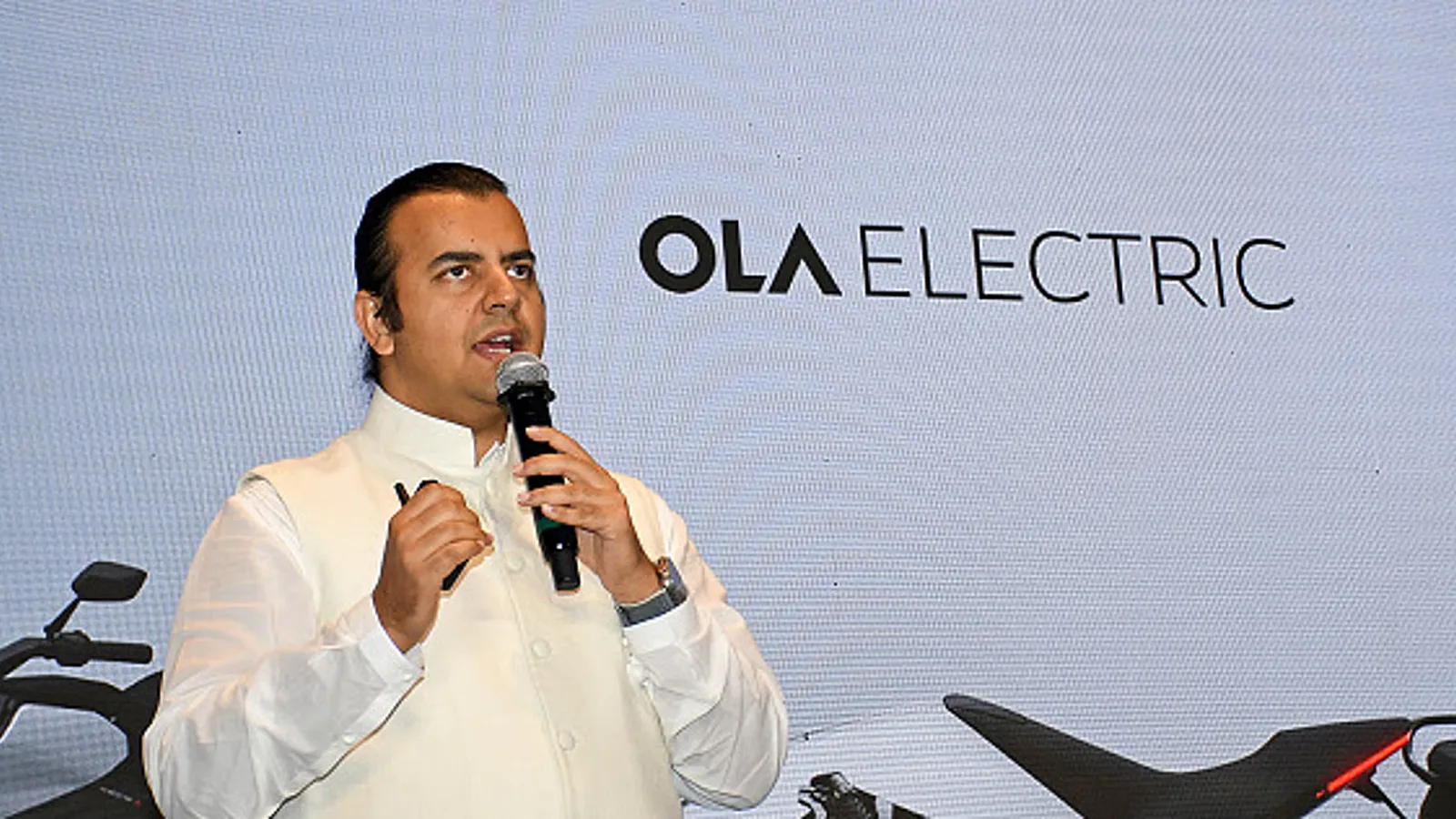
Founder and CEO Bhavish Aggarwal recently let go of a portion of his shares in Ola Electric — a move that directly affected the share price, which tumbled to a fresh 52-week low soon after the news broke.
But the underlying reason wasn’t about losing faith in the company’s product or mission.
Multiple exchange filings show that Aggarwal’s decision stemmed from clearing personal financial obligations. He had previously pledged some of his Ola Electric shares as collateral to back a personal loan linked to his other venture — his artificial intelligence startup, Krutrim AI.
By selling part of his stake, he effectively freed up pledged shares and settled outstanding obligations. This helped him release the stock used as security and reduce promoter-level leverage.
Also Read KSH International IPO Day 3: Subscribed 26% & Flat GMP Update
Real-World Reaction — Stock & Investor Sentiment

Ordinarily, a leader shedding stock can be interpreted as a red flag for investors. In this case, the markets certainly reacted. Ola Electric’s shares slid more than 3% shortly after the announcement and traded near yearly lows.
Some market watchers feared that repeated stake reduction might signal weakening confidence in the EV business at a time when competition from rivals like Ather, TVS, and Hero Electric is heating up. Others stressed that volatility in EV valuations is now commonplace, especially with global macro pressure on growth stocks.
Here’s the emotional part — many retail investors who backed Ola Electric since its IPO felt a pang of disappointment, interpreting Aggarwal’s move as uncertainty, even if it was purely personal. That emotional reaction can sometimes outweigh business fundamentals in short-term market dynamics.
What This Means for Ola Electric’s Future Strategy
Strategically, this is not a corporate funding round or a dilution of the company’s capital base. Ola Electric’s operations and product roadmap appear unaffected by this personal stake sale.
In fact, frees up management focus to double down on core EV offerings, battery tech, and service expansion — which are key growth drivers in India’s booming EV scene of 2025. The company has been pushing new technologies and service programs aimed at improving customer experience, even as broader EV adoption accelerates across India’s tier-1 and tier-2 cities.
For many industry experts, this move signals something more subtle — a shift in how tech founders balance personal ventures and flagship businesses in an era where AI and mobility intersect.
The AI Connection — Why It Matters
The other piece of this story is closely tied to Aggarwal’s AI ambitions. Reports suggest he funnelled capital into his AI offshoot, Krutrim AI, which has been expanding into cloud infrastructure and enterprise AI services.
This tells a broader narrative — founders today are pursuing multi-sector ambitions, where mobility, AI, and consumer tech interlock.
In many ways, this reminds me of global tech leaders who diversify their focus to build future-ready businesses. It’s not just about selling EVs anymore — it’s about building the ecosystem around intelligent mobility, software, data, and next-gen infrastructure.
MoEngage’s $280M Funding Round — A Bright Spot
In the same tech cycle, MoEngage, a customer engagement platform, closed a huge $280 million funding round — a major win for Indian SaaS and cloud startups.
This contrast is telling. While one founder is reshaping his stake distribution, another Indian tech company is raising global capital at scale, demonstrating that investment appetite for technology beyond EVs remains strong.
For Indian tech founders and employees, that’s an emotional boost — it shows that successful growth stories are still possible in the homegrown ecosystem.
Also Read ICICI Prudential AMC IPO Allotment Status & How to Check
What Founders & Investors Should Learn
From a founder’s lens, selling a personal stake doesn’t always spell trouble. Sometimes, it’s a prudent step to reduce financial leverage and create room to pursue new ideas.
For investors — whether institutional or retail — the key is to separate corporate strategy from personal finance decisions.
From where I stand, this move highlights a core truth about leadership: even visionary CEOs must manage personal and corporate priorities in a high-pressure market. That’s real life, not a textbook story. And it’s something regular investors — who put their hard-earned money into these stocks — understand emotionally more than analytically.
Conclusion
In 2025’s fast-moving tech world, Bhavish Aggarwal’s stake sale at Ola Electric isn’t a retreat — it’s a strategic pivot. It reflects the complex interplay of personal ambition, cash flow realities, and future-facing vision in India’s startup ecosystem.
If you’re watching from the outside, it might look like tension. But look closer — you’ll see leadership working to balance the old and build the new. That’s the real story worth noting.
FAQs About Ola Electric Stake
1. Why did Bhavish Aggarwal sell his Ola Electric stake?
Ans.: Bhavish Aggarwal sold part of his ola electric stake mainly to clear personal financial obligations linked to pledged shares. The move was aimed at reducing leverage, not exiting the company.
2. Does this mean Bhavish Aggarwal has lost confidence in Ola Electric?
Ans.: No. There is no indication that he has lost faith in Ola Electric’s business. The sale was a personal financial decision and does not affect the company’s operations or roadmap.
3. How did the market react to the stake sale?
Ans.: Ola Electric shares saw short-term pressure and hit a 52-week low after the announcement, largely due to investor sentiment rather than a change in business fundamentals.
4. Will this impact Ola Electric’s future growth plans?
Ans.: At the moment, Ola Electric’s expansion plans, product development, and EV strategy remain unchanged. The stake sale does not involve fresh dilution or company-level fundraising.
5. Why is Krutrim AI being linked to this decision?
Ans.: Reports suggest the funds helped Aggarwal manage obligations related to his AI venture, Krutrim. This reflects how founders today balance multiple long-term bets across sectors.
Also Read Vedanta Share Price Surges After NCLT Demerger Nod
Disclaimer: The views and recommendations above are those of individual analysts or brokerage companies, not US News Weeks. We advise investors to check with certified experts before making any investment decisions.
Source : The Economic Times & NDTV Profit - Ola Electric Stake
✍️ Written by Nikhil Singh
Market & IPO Analyst | Business News Writer | Tech-Auto Observer
Nikhil has been tracking Indian IPOs, consumer brands, tech & automobile overview, and financial trends since 2019. His writing style seamlessly blends market insight with a relatable human voice, making complex data accessible to everyday investors.