“This article expresses my personal analysis based on publicly available automotive data, official teasers, and industry reports.”
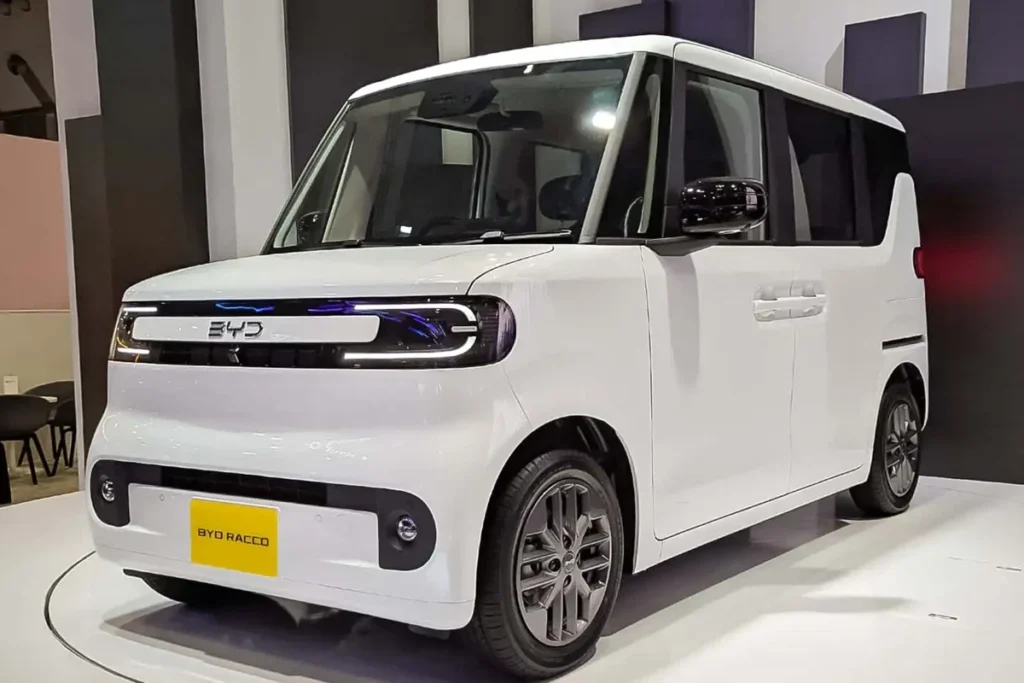
Imagine cruising through Tokyo’s narrow lanes in a cute, smart little EV—one that isn’t from the usual Japanese makers. That’s precisely what the Chinese automaker BYD is betting on with its new model: the BYD Racco. Unveiled at the 2025 Japan Mobility Show, this micro electric car is made exclusively for Japan, and it’s set to launch in 2026.
It’s compact, efficient, and signals BYD’s bold move into the heart of the Japanese kei-car segment—a place previously dominated by domestic brands.
BYD Racco Kei Car: What Makes It Special
- The BYD Racco is built according to strict Japanese “kei car” standards: length 3,395 mm, width 1,475 mm, height 1,800 mm.
- It flaunts a boxy silhouette (typical of kei cars), sliding rear doors, C-shaped LED lights, and a minimalist interior with a floating touchscreen.
- The powertrain? A 20 kWh LFP “Blade” battery with about 180 km WLTC range, and fast-charging up to 100 kW is reportedly supported.
- In short: it ticks the boxes for the short-hop commuter lifestyle in Japan—narrow roads, small parking spots, efficient mobility.
Why The 2025-26 Trend Favors Micro EVs
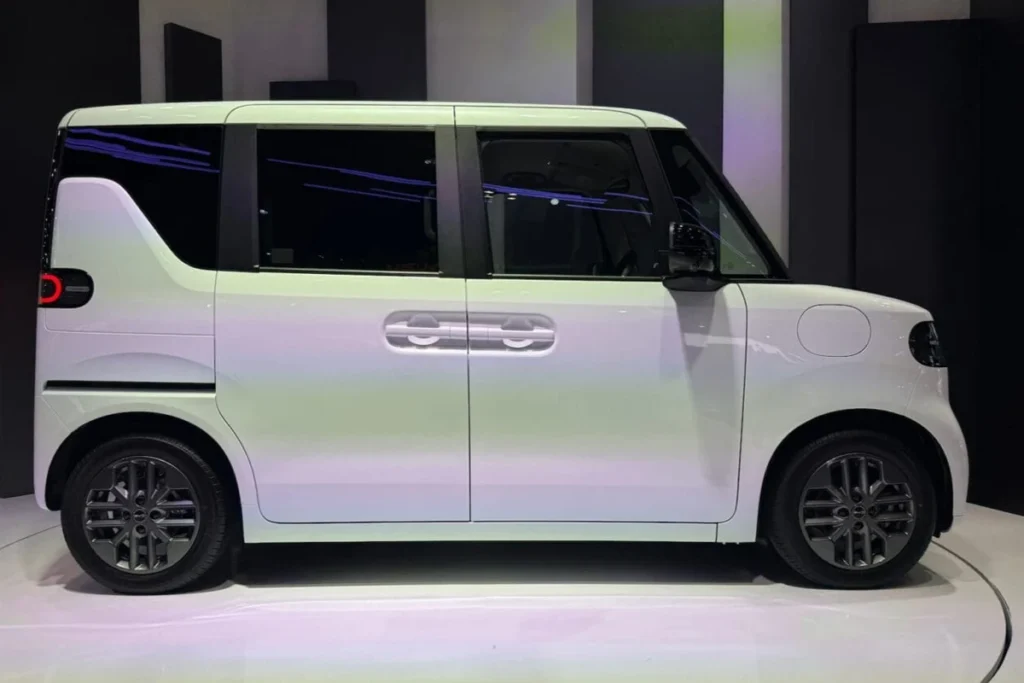
In Japan, kei cars account for roughly one-third of the automobile market.
With rising fuel costs, urban congestion, and a push for low-emission mobility, compact EVs are becoming ever more attractive. For BYD, this is a strategic entry point. According to analysis, Japanese officials view BYD’s move as a wake-up call for local brands who’ve leaned heavily on hybrids rather than fully electric small cars.
From a consumer perspective: a small footprint, decent range for daily errands (180 km), and the brand backing of BYD could make the Racco a compelling choice.

How BYD Racco Stacks Up Against Rivals
Compare it with the Nissan Sakura: about 20 kWh battery, similar range in the 180 km ballpark.
According to Rush Lane, BYD is expected to launch the Racco at around ¥2.0-2.6 million (₹11.6–17 lakh) in Japan.
That places it right in the battleground with existing players like the Honda N‑Box and the Sakura. But BYD has the advantage of its global EV-expertise and arguably more aggressive pricing.
Of course, real-world consumer acceptance will depend on after-sales support, charging infrastructure, and local brand loyalty—areas where Japanese brands traditionally excel.
What This Means & Why It Matters
From my perspective, the Racco isn’t just a new car—it’s a signal. It tells us that EV makers are focusing not only on large vehicles or SUVs, but also on the smallest, most urban-friendly segments.
For Japan: A foreign brand entering the kei class disrupts the status-quo. For BYD: If successful, the Racco gives a blueprint for similar markets globally—tight spaces, eco-friendly mandates, urban populations.
For consumers: It offers a chance to own a full EV in a small form factor at a relatively accessible price (for Japan).
Personally, I find this exciting—seeing EV innovation reach even the compact urban forms feels like the shift of mobility is not just about glamour cars, but real-life practicality.

Conclusion
In short, the BYD Racco brings a fresh twist to Japan’s beloved kei-car segment. With smart design, efficient range, and a compelling price point, it may well shake up expectations. I’m optimistic: for city commuters looking for a compact EV, the Racco could be a surprisingly strong contender. If I were in Japan, I’d be keen to test-drive it.
Here’s hoping BYD brings this kind of innovation to many more urban markets soon.
Also Read Best Hybrid Compact SUV of 2025
Disclaimer: The information in this article is based on official teasers and media reports available at the time of writing. Specifications, features, and launch timelines may vary upon the official release by BYD. The views expressed are for informational purposes only and do not constitute investment or purchase advice.
Source : Rush Lane & Autocar India - BYD Racco Kei Car Unveiled
✍️ Written by Nikhil Singh
Market & IPO Analyst | Business News Writer | Tech-Auto Observer
Nikhil has been tracking Indian IPOs, consumer brands, tech & automobile overview, and financial trends since 2019. His writing style blends market insight with a relatable human voice — making complex data simple for everyday investors.