“This article expresses my personal analysis based on publicly available financial data and market reports.”
Bajaj Housing Finance Stock Crashes 9%: What Sparked the Sharp Sell-Off?
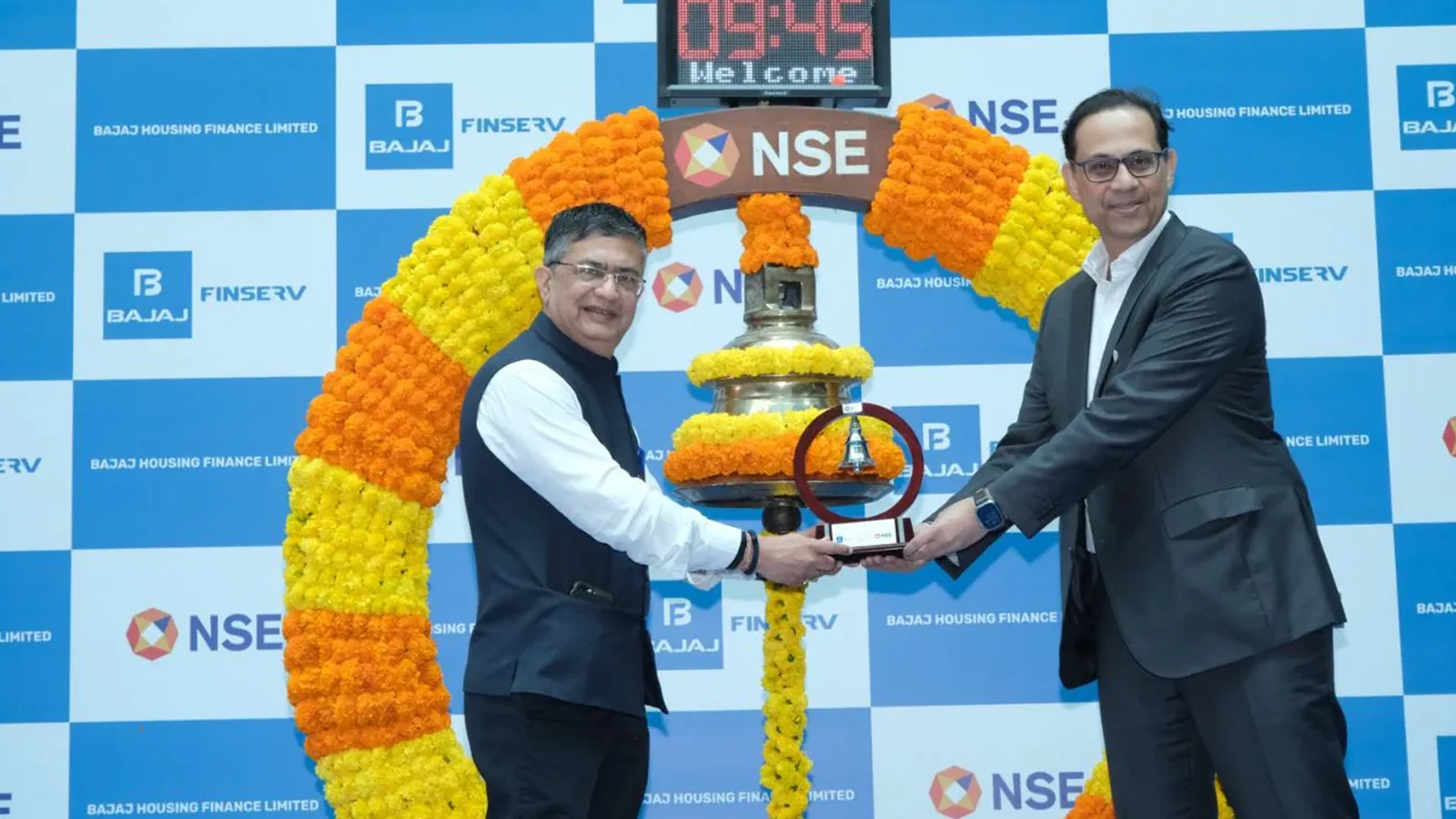
The market witnessed a surprising jolt today when Bajaj Housing Finance Stock (BHFL) dropped over 9%, hitting a fresh 52-week low. For a company backed by the trusted Bajaj brand, such a steep fall naturally sparked panic among retail investors.
There was a clear sense of concern on social media and trading forums. Many investors felt blindsided, wondering how a fundamentally strong NBFC suddenly slipped into turbulent waters.
Let’s break down what actually happened.
Weak Loan Growth and Rising Borrowing Costs Hit Confidence
According to the Times of India report, the fall wasn’t random. Analysts mentioned that slower-than-expected loan growth played a major role. In the housing finance segment, growth is everything. When disbursements slow down, investors immediately fear a deeper demand shift.
BHFL’s management reportedly flagged concerns over higher borrowing costs. This is a major red flag for NBFCs because their business model heavily depends on cheap capital and stable interest spreads.
In simple words, when money becomes costly, profits shrink.
This sentiment trickled into the market, pulling the stock down sharply.
Also Read Exato Technologies IPO: Strong Debut With Rising Investor Buzz
RBI’s Tightening Environment Is Pressuring NBFC Stocks
The nvestors are already nervous about NBFCs after the recent tightening environment created by the Reserve Bank of India. The regulator has been consistently monitoring unsecured lending, liquidity buffers, and risk classification.
Even though BHFL operates in the secured housing segment, sentiment-driven selling impacted its stock. Traders often don’t differentiate when fear spreads across the sector.
In 2025, markets have shown increased sensitivity toward interest-rate movements and regulatory cleanup. This fall felt like a reaction not just to company-specific triggers, but also broader macro anxiety.
A 52-Week Low Raises Fresh Questions About Future Growth
Touching a 52-week low is more than a technical event—it affects investor psychology. When a stock hits the lowest point of the year, it creates a wave of uncertainty. Many short-term traders immediately book losses.
The worrying part is that the stock didn’t show major signs of recovery during intraday trading. This indicates that:
- Sentiment is weak
- Buyers are hesitant
- The market wants stronger clarity from management
Investors now expect updated guidance and commentary on how BHFL plans to navigate the high-cost environment.

Real-World Example: Housing Finance Sector Is Getting Competitive
The housing loan market in India has become extremely competitive in 2025. Companies like HDFC Ltd (post-merger), LIC Housing, and large private banks are aggressively cutting processing fees and offering flexible EMIs.
BHFL, despite its solid brand, faces pressure to maintain margins.
According to Times of india, for instance, LIC Housing Finance recently announced special rate schemes for salaried customers. Such moves attract customers but squeeze the margins of competitors.
In this scenario, even a slight dip in growth becomes a market-moving signal.
Investors React to Signals Faster in 2025
Compared to previous years, today’s market reacts much faster.
Thanks to real-time apps, social media rumours, and algorithmic trading, a single negative hint can trigger a big sell-off.
In BHFL’s case, a combination of:
- Weak near-term growth
- Borrowing cost challenges
- Sector-wide nervousness
Many investors said this fall felt sudden, but the indicators were visible in the company’s recent updates.
What Should Investors Make of This Fall?
Most analysts believe the long-term story of BHFL remains stable. Housing demand in India continues to be strong, especially in Tier-2 and Tier-3 cities.
But in the short term, margin pressure will remain a challenge.
Some analysts are advising investors to wait for:
- Q4 results
- Updated growth guidance
- Management commentary on cost control
It’s clear that the next two quarters will determine the pace of recovery.
Also Read Bajaj Finserv Share Rises: Market Mood Turns Positive in 2025
My Take: The Fall Feels Sharp, but Not Permanent

As someone who tracks financial markets closely, this drop felt more sentiment-driven than fundamental. The company still has a strong brand, a wide loan book, and robust customer trust.
But the market in 2025 has no patience for uncertainty.
My personal opinion, This fall may turn into an opportunity if the management delivers clarity in the upcoming earnings call. Panic selling rarely benefits long-term investors.
Conclusion: A Tough Day, but Not the End of the Story
The 9% fall in Bajaj Housing Finance stock shook investors, but every stock goes through phases of panic and recovery. The company’s fundamentals remain intact, though the near-term challenges are real.
As markets evolve rapidly in 2025, transparency and confidence will decide how quickly this stock stabilises again.
FAQs About Bajaj Housing Finance Stock
1. Why did Bajaj Housing Finance stock fall 9%?
Ans.: The stock fell mainly due to slower-than-expected loan growth and rising borrowing costs. These two factors raised concerns about pressure on future margins, leading to a sharp market reaction.
2. Did RBI’s tightening norms affect the stock?
Ans.: Yes, indirectly. Although BHFL deals mostly in secured housing loans, the overall fear around NBFCs after recent RBI scrutiny affected sector sentiment, causing investors to sell.
3. Is Bajaj Housing Finance facing any major financial trouble?
Ans.: No. There is no sign of financial distress. The fall is mostly related to short-term uncertainty around growth and rising cost of funds.
4. Should investors worry about the 52-week low?
Ans.: A 52-week low is often a psychological trigger for panic, but experts say the company’s long-term fundamentals remain stable. Investors should wait for upcoming management guidance before making decisions.
5. Will the stock recover in the next few months?
Ans.: Recovery will depend on how quickly the company manages margins and borrowing costs. Q4 and FY26 guidance will play a critical role in shaping investor confidence.
Also Read Lenskart Share Price Rises After Strong Q2 FY26 Results
Disclaimer: The views and recommendations above are those of individual analysts or brokerage companies, not US News Weeks. We advise investors to check with certified experts before making any investment decisions.
Source : Times of India & Moneycontrol - Bajaj Housing Finance Stock
✍️ Written by Nikhil Singh
Market & IPO Analyst | Business News Writer | Tech-Auto Observer
Nikhil has been tracking Indian IPOs, consumer brands, tech & automobile overview, and financial trends since 2019. His writing style seamlessly blends market insight with a relatable human voice, making complex data accessible to everyday investors.